
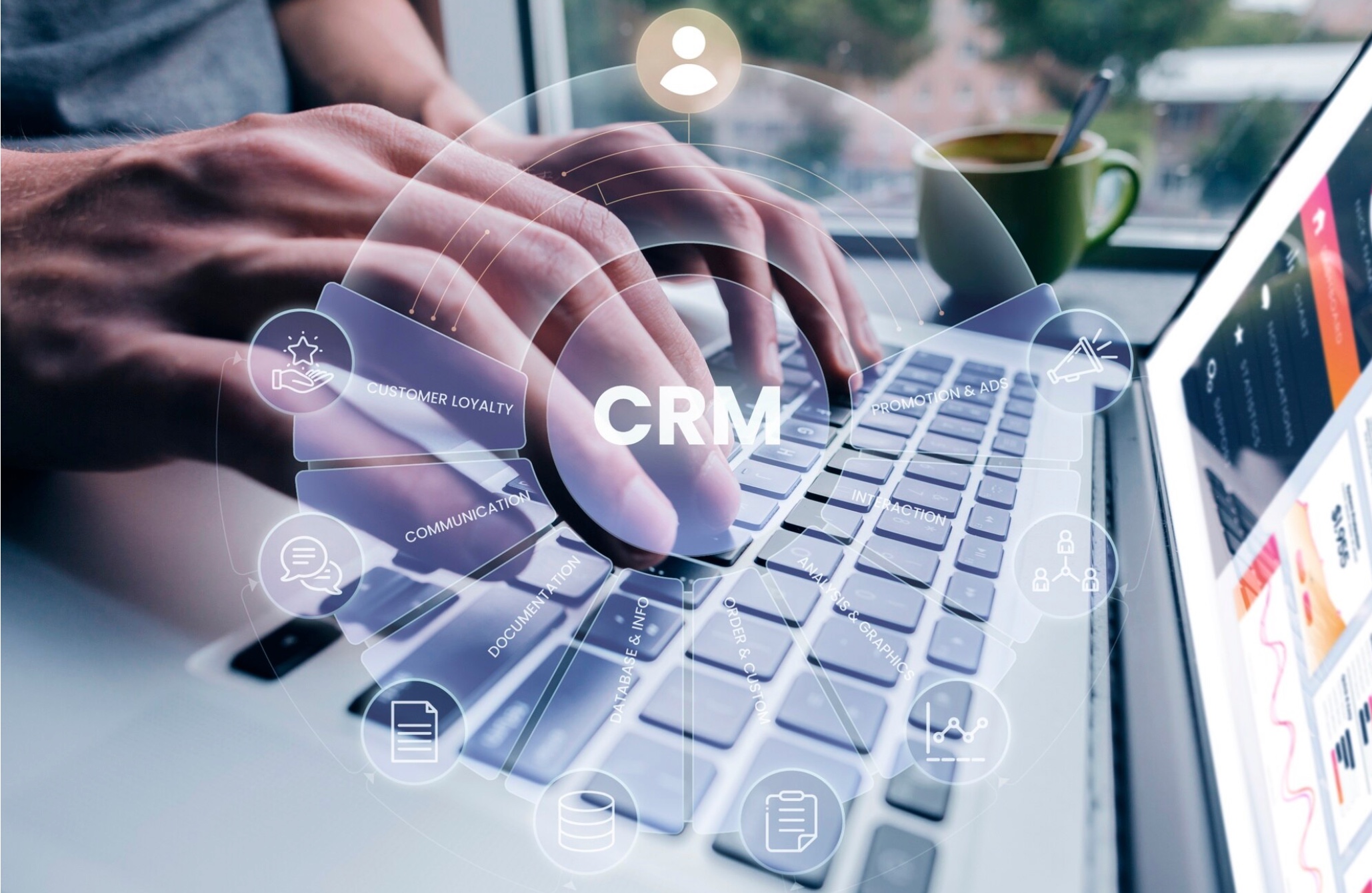
CRM Integration and Automation Service
CRM integration brings a company's customer data together in one place and streamlines its sales and marketing processes. A CRM system gives organisations data integrity and strong communication between teams. This structure improves the customer experience and increases operational efficiency. Modern businesses need CRM software infrastructure to stay competitive.
CRM integration also supports sales and marketing operations through automation. CRM applications and mobile CRM solutions give organisations strong data management in the field. An integrated CRM programme speeds up data flow and reduces manual work, so the customer relationship management approach becomes an important part of the company culture.
What Is CRM Integration?
CRM integration means bringing different software systems and data sources together within a single CRM system. Companies consolidate their sales, marketing and customer service data on one shared platform. This preserves data consistency and enables rapid information sharing between teams, allowing organisations to analyse customer behaviour more accurately.
CRM stands for Customer Relationship Management. The approach is designed to help companies build long-term, sustainable relationships with their customers, and CRM integration provides the technological foundation for it. CRM software allows organisations to manage customer data in an orderly, accessible way.
In short, CRM integration serves the following goals:
- Consolidating customer data in one place
- Aligning sales and marketing processes
- Maintaining data accuracy
- Strengthening communication between teams
Why CRM Integration Matters
Customer data is now among the most valuable assets a business holds, yet data scattered across different systems is difficult to manage. CRM integration consolidates it within a single CRM system, giving companies a much clearer view of the customer journey.
CRM integration also accelerates operational processes. Sales teams can track prospects easily through the CRM programme, marketing teams analyse campaign performance via CRM applications, and customer service teams gain fast access to historical customer data.
The main benefits CRM integration offers businesses are summarised in the table below.
| Benefit | Description |
| Data integrity | All customer data is held in a single system |
| Operational efficiency | Manual data entry is reduced |
| Sales performance | Sales teams track opportunities quickly |
| Marketing efficiency | Campaigns are managed on a data-driven basis |
The Components of a CRM System
A CRM system forms a robust infrastructure through the interaction of several components, each built to collect, analyse and manage customer data. CRM software allows organisations to manage all customer processes systematically, and this structure forms the basis of the customer relationship management approach.
CRM components typically comprise sales management, marketing automation and customer support modules, which together allow organisations to track the customer lifecycle end to end. CRM integration connects these modules to other systems, so businesses can manage data flow without interruption.
| CRM Component | Function |
| Sales management | Sales opportunities and customer processes are tracked |
| Marketing automation | Campaigns are planned and performance is measured |
| Customer support system | Requests and support processes are managed |
| Reporting and analysis | Data analysis and performance reports are produced |
How Is CRM Integration Carried Out?
CRM integration is delivered as a planned process and requires technical analysis. Organisations review their existing software infrastructure and identify their data sources, then design an integration architecture compatible with the CRM system. This process is critical to both data security and system performance.
Integration is not simply a matter of establishing a technical connection. A company's sales, marketing and customer service processes are assessed as part of the same structure, ensuring customer data is routed to the right systems and making data management more organised and sustainable.
A successful CRM integration requires a defined set of stages to be worked through methodically. Organisations first examine the data structure of their existing software, then determine how data will flow. This planning improves how efficiently the CRM programme is used.
The integration process usually follows these steps:
- Analysing the existing software infrastructure
- Identifying data sources
- Mapping data fields
- Establishing API connections
- Running system tests
- Planning user training
When this process is planned properly, the CRM software works in harmony with every other system. Sales, marketing and customer service teams all work from shared data, allowing businesses to apply the customer relationship management approach far more effectively.
Needs Analysis and Data Mapping
The first stage of CRM integration is needs analysis. Here the company's existing software infrastructure and data sources are reviewed, and teams analyse data flows to establish the integration requirements. This produces the technical plan for the integration.
Data mapping then matches up the data fields held in different systems, aligning the CRM software with the other applications. This reduces the risk of data loss and preserves data accuracy, giving organisations a sound data management foundation.
API Connections and System Integration
API connections allow different applications to communicate with one another. During CRM integration, API technologies speed up the exchange of data, keeping the CRM system continuously synchronised with other software.
API integrations create a strong link between sales, marketing and support systems, easing the flow of data between CRM applications and other platforms. It is through these integrations that organisations manage their automation processes.
Testing, Go-Live and User Training
Once the CRM integration is complete, testing begins. Data flows and system performance are checked, any errors are identified and technical adjustments made, so that the system is ready for live use.
After go-live, user training is scheduled. Teams learn how to use the CRM programme and adapt quickly to the new processes, which improves how efficiently the system is used.
Technologies Used in the CRM Integration Process
CRM integration is delivered through a combination of technologies covering data transfer, system communication and security. Organisations use these technologies to underpin their CRM software infrastructure.
Modern integration architectures are built on API-based data communication. Data synchronisation and security protocols also play an important role in the process.
API Technologies (REST, SOAP, Webhook)
API technologies enable different software systems to share data. The REST and SOAP protocols facilitate communication between applications, while webhook technology allows systems to share data in real time.
These technologies create a strong link between the CRM system and other enterprise applications, allowing businesses to manage data flow without interruption.
Integration Tools Specific to CRM Platforms
CRM platforms are supported by a range of integration tools that simplify data transfer and speed up the integration process. Through CRM applications, organisations connect their ERP, e-commerce and marketing tools to one another.
Integration tools make data management easier and simplify technical processes, which in turn makes the CRM system more efficient to use.
Data Synchronisation and Security Protocols
Data synchronisation is one of the most critical stages of CRM integration. Data is transferred between systems at regular intervals and kept up to date, so businesses always work with current customer information.
Security protocols play an important part in protecting that data. Organisations store customer information on secure infrastructure, which builds customer trust and reduces the risk of a data breach.
Automation Scenarios with CRM Integration
CRM integration opens up many automation opportunities. Organisations can automate their sales and marketing processes, increasing operational efficiency and freeing teams to work more strategically.
The main use cases for CRM automation are:
- Sales pipeline management
- Lead management and customer segmentation
- Task and reminder automation
- Campaign performance tracking
Sales Pipeline Automation
Sales pipeline automation keeps prospect processes running in an orderly way. CRM software tracks opportunities through defined stages, giving sales teams a clear view of the customer journey.
Automation speeds up the sales process and reduces the need for manual follow-up, allowing organisations to analyse sales performance more accurately through the CRM system.
Lead Scoring and MQL/SQL Management
Lead scoring assesses how likely a prospect is to buy. The CRM programme analyses user behaviour and assigns a score, so sales teams can focus on the highest-potential customers.
MQL and SQL management strengthens collaboration between marketing and sales teams, and CRM applications manage these processes on a data-driven basis.
Automated Task, Reminder and Notification Systems
CRM automation systems create task plans for teams and send automatic reminders at set points in a process, keeping customer communication consistent.
Automated notifications help teams keep on top of processes, and the CRM system reduces operational errors.
Professional CRM Integration with MegabelSoft
Professional CRM integration plays an important part in a company's digital transformation. Experienced teams manage the process methodically, safeguarding both data security and system performance.
MegabelSoft, provides organisations with technical support for CRM integration and CRM presentation services. The agency's teams analyse the company's existing software infrastructure and develop integration solutions to suit it.
Digitalise Your Business with CRM Integration Solutions in Antwerp
Antwerp is one of the key cities for technology and entrepreneurship. The region places real value on investment. CRM integration is an important part of this transformation.
Companies operating in Antwerp use CRM software solutions to keep their customer data well organised. CRM applications improve coordination between sales and marketing teams, strengthening a company's competitive position.
Benefits Gained After CRM Integration
Once CRM integration is complete, businesses gain a range of benefits. Data management becomes more organised, operational processes speed up and organisations analyse customer data more effectively.
The key benefits of CRM integration are:
- Centralised management of customer data
- Speed and efficiency in sales processes
- Data-driven management of marketing campaigns
- Higher customer satisfaction
Points to Consider in CRM Integration
CRM integration is a technical process that requires planning. Before starting, organisations analyse their data structure and assess the compatibility of their existing software systems.
Data security, system performance and user training are important factors in a successful integration, as they directly affect how efficiently the CRM system is used.
CRM Integration Pricing
CRM integration pricing varies with the scope of the project. The number of systems to be integrated and the data structure both affect the cost, as do the CRM software chosen and the automation features required.
Professional integration services deliver significant long-term benefits. A well-planned CRM integration reduces an organisation's operating costs.